
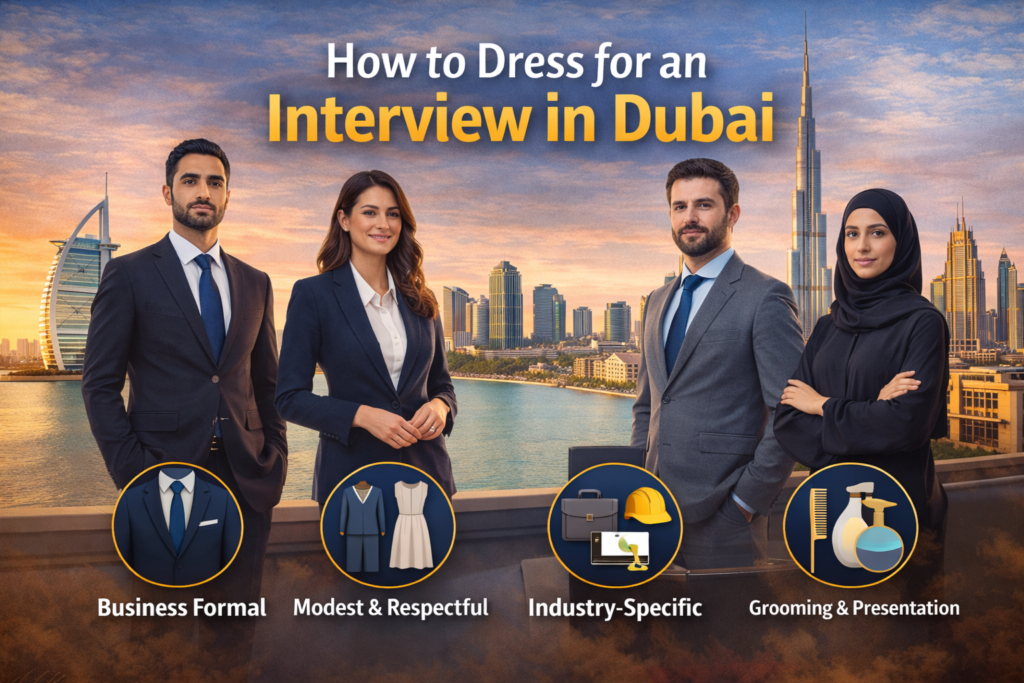
You’ve updated your CV, researched the company, and rehearsed answers to common interview questions. Then comes the moment of truth — you open your wardrobe and wonder:
“What should I wear to an interview in Dubai?”
It’s a valid concern.
Dubai is a global metropolis rooted in strong cultural traditions. It blends ultra-modern corporate towers with deep respect for modesty and professionalism. Some companies operate with conservative dress codes; others embrace smart casual creativity. Sometimes, both exist within the same building.
Your interview outfit is your first non-verbal message to the employer. In the UAE, where first impressions carry significant weight, how you dress can influence how seriously you’re perceived — even before you speak.
This comprehensive guide will help you understand exactly how to dress for interview success in Dubai — across industries, cultures, and climates.
The Golden Rule of Interview Attire in Dubai
If you remember only one thing, remember this:
When in doubt, overdress.
Dubai’s professional culture leans more formal than many Western cities. While “business casual” may work elsewhere, in Dubai it’s often safer to aim slightly higher.
It’s better to be remembered as polished and professional than underdressed and careless.
The Three Pillars of Dubai Interview Dressing
Before we discuss industries, understand these core principles:
1. Modesty
Dubai is modern but culturally conservative.
- Shoulders should be covered.
- Skirts and dresses should be at least knee-length.
- Avoid deep necklines.
- Avoid tight or revealing clothing.
- Avoid sheer fabrics unless layered appropriately.
Modesty signals cultural awareness and good judgment.
2. Professionalism
Your outfit should be:
- Clean
- Ironed
- Well-fitted (not tight, not oversized)
- Coordinated
Wrinkled clothing or scuffed shoes can undermine your credibility.
3. Quality Over Flashiness
Dubai appreciates elegance, not loudness.
- Avoid excessive logos.
- Avoid flashy colors (unless in creative roles).
- Avoid overpowering perfume.
Subtle sophistication always wins.
Dressing by Industry in Dubai
The correct outfit depends heavily on the industry. Let’s break it down sector by sector.
1. Corporate, Banking, Government & Law
Vibe: Conservative, Formal, Authoritative
This includes sectors such as finance, oil & gas, government entities, legal firms, and large multinational corporations.
For Men
- Suit: Dark navy, charcoal grey, or black
- Shirt: Crisp white or light blue
- Tie: Classic silk tie (solid or subtle pattern)
- Shoes: Polished black or dark brown Oxfords or Derbies
- Accessories: Minimal — classic watch
Facial hair should be clean-shaven or precisely trimmed.
This sector values tradition and hierarchy. Your goal is to project reliability and seriousness.
For Women
- Suit: Pantsuit or skirt suit in navy, black, or grey
- Skirt length: At or below the knee
- Blouse: Modest neckline, non-sheer fabric
- Shoes: Closed-toe pumps (2–3 inch heel)
- Jewelry: Simple and elegant
Makeup should be natural and polished. Nails should be neutral or soft tones.
In conservative corporate settings, understated elegance is powerful.
2. Creative Industries (Marketing, Media, Tech Startups, Design)
Vibe: Smart Casual, Polished, Expressive
Creative companies appreciate personality — but within limits.
For Men
- Blazer or tailored jacket
- Smart chinos or dark trousers
- Button-down shirt (tie optional)
- Clean leather loafers or brogues
- Minimalist sneakers (only if company culture supports it)
You can experiment slightly with color — soft patterns, textured fabrics, or lighter tones — but avoid anything too loud.
For Women
- Smart midi dress with blazer
- Tailored trousers with elegant blouse
- Structured jumpsuit (modest and tailored)
- Stylish flats or block heels
Accessories can show personality — a tasteful scarf or structured handbag works well.
The key here: creative, not casual.
3. Hospitality, Aviation & Luxury Retail
Vibe: Impeccably Groomed, Service-Oriented, Polished
Dubai’s hospitality industry is world-class. Standards are extremely high.
For Men
- Perfectly fitted suit
- Immaculately polished shoes
- Clean shave or perfectly groomed beard
- Neatly styled hair
- Subtle fragrance
Presentation matters intensely.
For Women
- Skirt suit or elegant professional dress
- Closed-toe heels
- Hair styled neatly (off face if long)
- Natural, flawless makeup
- Manicured nails (neutral or classic red)
Attention to detail is critical in this sector. Every small element counts.
4. Engineering, Construction & Site-Based Roles
Vibe: Practical, Professional, Safety-Oriented
If your interview is office-based only, lean formal.
If there’s a site visit involved, safety becomes priority.
Office Interview
Men:
- Button-down shirt
- Smart trousers
- Closed-toe formal shoes
Women:
- Blouse with tailored trousers
- Closed-toe flats or low heels
Site Visit Interview
Men:
- Clean work trousers
- Polo or button-down shirt
- Steel-toe boots
- Hard hat & safety vest (if available)
Women:
- Sturdy trousers (not leggings)
- Modest top
- Flat safety shoes
- Hair tied back
Showing up unprepared for a site visit can be a red flag.
Cultural Sensitivity in Dubai
Understanding local culture enhances your professional image.
Dubai is part of the United Arab Emirates, where tradition and modernity coexist.
Respect for Local Dress
You are not required to wear traditional Emirati attire unless you are Emirati.
However, you may see:
- Emirati men wearing the kandura
- Emirati women wearing the abaya
Respecting this cultural context is important.
Ramadan Considerations
During Ramadan:
- Dress more conservatively than usual
- Avoid strong perfume during daytime
- Maintain respectful demeanor
Even creative industries adopt slightly more modest standards during this time.
Greeting Etiquette
- A smile and polite greeting is appreciated.
- If greeting the opposite gender, wait to see if they extend their hand first.
- If not, a slight nod with hand over heart is respectful.
Cultural awareness adds to your professional appeal.
Dressing for Dubai’s Climate
Dubai is hot — but interviews are indoors and air-conditioned.
Do not let heat tempt you into dressing casually.
Choose Breathable Fabrics
- Cotton
- Lightweight wool
- Linen blends
Avoid heavy synthetics.
Managing Heat Before the Interview
- Arrive early
- Use restroom to freshen up
- Carry tissues
- Stay hydrated
You’ll likely move quickly from air-conditioned car to building.
Grooming Matters as Much as Clothing
In Dubai, grooming is taken seriously.
For Everyone:
- Fresh breath
- Clean nails
- Ironed clothes
- Subtle fragrance
For Men:
- Trimmed beard or clean shave
- Hair neatly styled
For Women:
- Controlled hairstyle
- Natural makeup
- No chipped nail polish
Presentation equals discipline.
Common Mistakes to Avoid
Avoid these interview attire errors:
- Sleeveless tops
- Short skirts
- Overpowering perfume
- Excessive jewelry
- Dirty shoes
- Wrinkled clothing
- Casual backpacks (use professional folder or briefcase)
Remember: even small details matter.
What to Carry With You
Bring:
- Printed CV copies
- Passport copy
- Visa copy
- Certificates
- Professional folder
Avoid carrying unnecessary items.
A clean leather bag or structured tote is ideal.
The Night-Before Checklist
Outfit
- Ironed
- Tried on
- Comfortable
Shoes
- Polished
- Comfortable
- Heel tips intact
Grooming
- Hair styled
- Nails clean
- Facial hair trimmed
Documents
- Organized in folder
- Extra copies ready
Logistics
- Check traffic
- Plan route
- Aim to arrive 15–20 minutes early
Preparation reduces stress.
Confidence: The Final Layer
Clothing influences psychology.
When you dress sharply:
- You feel composed.
- You project authority.
- You speak more confidently.
Your outfit should not distract you — it should empower you.
If you feel awkward in what you’re wearing, it will show.
Choose something that:
- Fits well
- Feels comfortable
- Matches the company culture
Confidence is your best accessory.
Final Thoughts
Dressing for an interview in Dubai is about balance:
- Modern yet modest
- Professional yet comfortable
- Polished yet authentic
Your attire communicates:
- Respect for local culture
- Understanding of professional expectations
- Seriousness about the opportunity
When you combine proper dressing with preparation, clarity, and cultural awareness, you dramatically increase your chances of making a powerful first impression.
Look sharp.
Stand tall.
Speak confidently.
And walk into that interview ready to succeed in Dubai.
Good luck!
Frequently Asked Questions (FAQ) – How to Dress for an Interview in Dubai
1. What is the safest outfit to wear to an interview in Dubai?
The safest choice is business formal attire. For men, this means a dark suit with a dress shirt and tie. For women, a tailored pantsuit or skirt suit with a modest blouse and closed-toe shoes is ideal. When unsure about the company culture, it’s better to slightly overdress than underdress.
2. Is business casual acceptable for interviews in Dubai?
Business casual may be acceptable in creative industries, startups, or tech companies. However, the outfit should still be polished and modest. A blazer with tailored trousers or a smart dress is usually a safe balance between formal and casual.
3. What should women avoid wearing to an interview in Dubai?
Women should avoid:
- Sleeveless tops
- Short skirts or dresses
- Low-cut necklines
- Sheer or tight clothing
- Excessive jewelry
Modesty and professionalism are highly valued in Dubai’s workplace culture.
4. Can men skip wearing a tie for an interview in Dubai?
In corporate sectors such as banking, law, and government, a tie is recommended. In creative or startup environments, a tie may not be necessary, but a blazer and well-fitted shirt are still advisable.
5. Are traditional Emirati clothes required for interviews?
No. Non-Emirati candidates are not expected to wear traditional attire. However, Emirati nationals may wear the kandura or abaya, which is fully appropriate and professional.
6. How should I dress for an engineering or site-based interview?
For office-based engineering interviews, wear formal or smart business attire. If the interview includes a site visit, prioritize safety by wearing sturdy trousers and closed-toe safety shoes. Always follow workplace safety guidelines.
7. Is it important to dress modestly during Ramadan?
Yes. During Ramadan, it is advisable to dress more conservatively than usual. Avoid strong perfume during daytime hours and maintain a respectful appearance.
8. What fabrics are best for Dubai’s hot climate?
Breathable fabrics like cotton, lightweight wool, and linen blends are recommended. Even though Dubai is hot, interviews are usually conducted indoors in air-conditioned environments.
9. Are open-toe shoes acceptable for interviews in Dubai?
Closed-toe shoes are generally recommended for both men and women. Open-toe footwear may appear too casual for most professional settings.
10. How important is grooming for interviews in Dubai?
Grooming is extremely important. Clean, styled hair, trimmed nails, subtle fragrance, and polished shoes all contribute to a strong professional impression.
11. Can I carry a backpack to my interview?
It is better to carry a professional briefcase, leather bag, or structured folder instead of a casual backpack. Presentation plays a key role in Dubai interviews.
12. Does dressing well really impact interview success in Dubai?
Yes. In Dubai, first impressions matter significantly. Dressing appropriately demonstrates cultural awareness, professionalism, and seriousness about the role, all of which positively influence hiring decisions.