
You’ve prepared your CV.
You’ve rehearsed your answers.
You’ve researched the company thoroughly.
But as you sit in the reception area waiting to be called in, a new thought crosses your mind:
“What if I accidentally do something culturally inappropriate?”
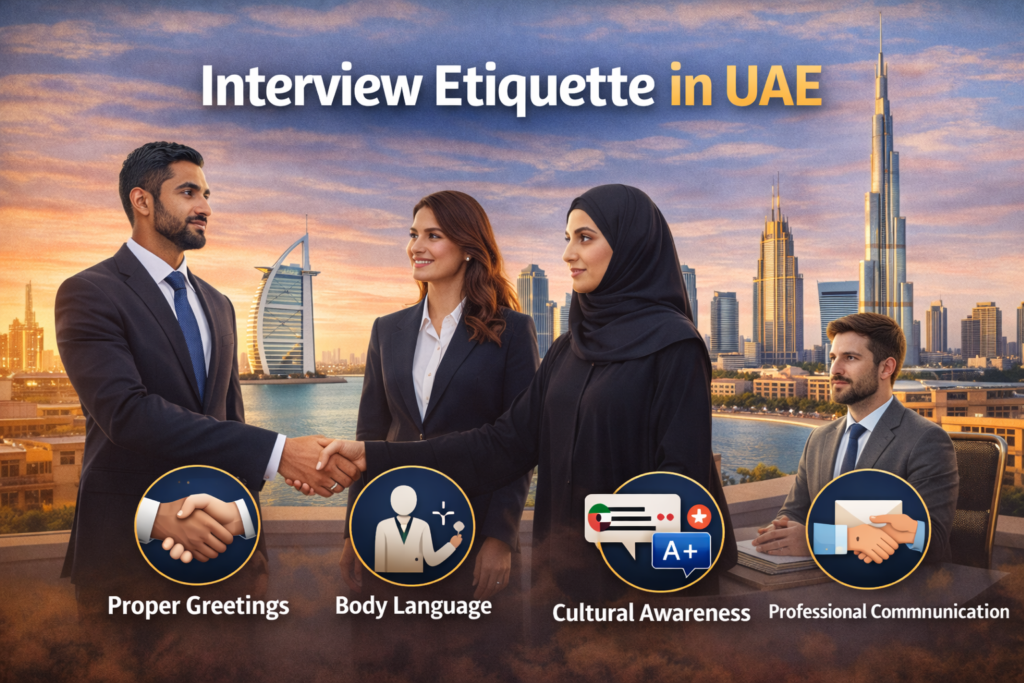
In the UAE, interview etiquette is not just about politeness — it reflects your professionalism, cultural awareness, and emotional intelligence. Employers evaluate not only what you say, but how you behave.
The United Arab Emirates is a global business hub rooted in strong traditions. Interview etiquette here blends international corporate standards with deep respect for local customs. Mastering this balance gives you a powerful advantage.
This comprehensive guide walks you through every stage of interview etiquette in the UAE — from arrival to follow-up.
Why Interview Etiquette Matters in the UAE
The UAE, part of the United Arab Emirates, values:
- Respect
- Courtesy
- Patience
- Professionalism
- Social harmony
Your behavior signals whether you are ready to thrive in a multicultural workplace.
In competitive job markets like Dubai and Abu Dhabi, etiquette can differentiate equally qualified candidates.
Before the Interview: Preparation as Respect
Preparation in the UAE is more than efficiency — it is a sign of respect for the interviewer’s time and position.
1. Punctuality Is Non-Negotiable
Arrive Early — But Not Too Early
- Aim to arrive 10–15 minutes before your scheduled time.
- Arriving 30–40 minutes early may inconvenience reception.
- Arriving late without communication is considered unprofessional.
Traffic in Dubai can be unpredictable. Always check navigation apps before leaving.
If You Are Running Late
- Inform HR immediately.
- Apologize sincerely.
- Provide a realistic arrival time.
- Avoid giving excuses — be concise and professional.
Responsibility is respected.
Research: Your Professional Foundation
UAE employers expect preparation.
Go beyond the company website:
- Study recent projects.
- Understand their UAE market presence.
- Review their LinkedIn page.
- Learn about their leadership team.
If you know your interviewers’ names, review their professional background. It helps build rapport naturally.
Documents: Organized and Professional
Bring:
- Multiple printed CV copies
- Passport copy
- Visa copy
- Certificates
- Professional portfolio (if applicable)
Keep everything in a clean folder. Never hand over folded papers from your pocket.
Presentation equals discipline.
The Greeting: Cultural Awareness in Action
The greeting is often the most delicate part of the interview process.
The Handshake
Same Gender
A firm handshake with eye contact and a smile is appropriate.
Always use your right hand.
Opposite Gender
Wait for the interviewer to initiate.
- If they extend their hand, shake confidently.
- If they do not, simply nod politely and place your right hand over your heart.
This gesture is respectful and widely understood.
Never force a handshake.
Verbal Greetings
You may say:
- “Good morning, it’s a pleasure to meet you.”
- “Thank you for the opportunity.”
If comfortable, you may greet with:
“As-salamu alaykum.”
Professional warmth is always appreciated.
Body Language: Speaking Without Words
Your body language communicates confidence and respect.
Posture
- Sit upright.
- Lean slightly forward to show engagement.
- Avoid slouching.
Eye Contact
Maintain respectful eye contact.
Avoid:
- Staring intensely.
- Looking at the floor constantly.
Balanced eye contact signals honesty and confidence.
Hands and Movement
- Keep hands visible.
- Avoid fidgeting.
- Do not tap your pen.
- Do not constantly adjust clothing.
Calm movements reflect composure.
Feet Position
Keep both feet on the floor.
Avoid crossing legs in a way that exposes the sole of your shoe toward the interviewer. In Arab culture, showing the sole of your shoe is considered disrespectful.
Communication Style in UAE Interviews
Clarity and professionalism are essential.
Speak Clearly and Concisely
English is the business language, but it may not be the first language for everyone present.
- Avoid slang.
- Avoid idioms.
- Be direct but respectful.
- Structure your answers clearly.
Rambling can signal lack of focus.
Be Positive
Never criticize:
- Previous employers
- Managers
- Colleagues
- Countries
Frame past experiences around growth and learning.
Listen Actively
- Let the interviewer finish speaking.
- Do not interrupt.
- Nod occasionally to show understanding.
- Ask for clarification politely if needed.
Patience is highly valued.
Panel Interviews in the UAE
Panel interviews are common.
When entering:
- Greet the most senior person first.
- Acknowledge others respectfully.
When answering:
- Begin by addressing the person who asked.
- Include others in eye contact.
- Engage the entire panel.
Avoid focusing on just one interviewer.
Handling Tough Questions Gracefully
Interviewers may challenge you intentionally to observe composure.
If faced with criticism:
Instead of becoming defensive, say:
“That’s a fair observation. While I may not have direct experience in that area, I have worked on similar tasks and am confident in my ability to adapt quickly.”
Humility combined with confidence is powerful.
Cultural Sensitivities to Remember
Hospitality: Accepting Tea or Coffee
In traditional offices, you may be offered Arabic coffee or tea.
It is polite to accept, even if you take only a small sip.
Say “Shukran” (thank you).
Refusing hospitality can unintentionally appear dismissive.
Titles and Formal Address
Address interviewers as:
- Mr.
- Ms.
- Dr.
Use first names only if invited.
Hierarchy matters in many UAE workplaces.
Prayer Times
If an interview pauses for prayer:
- Remain patient.
- Do not show irritation.
- Wait calmly.
Religious practices are integrated into daily life.
Ramadan Etiquette
During Ramadan:
- Dress conservatively.
- Avoid eating or drinking in front of fasting individuals.
- Show understanding regarding reduced working hours.
Respect is always remembered.
Virtual Interview Etiquette
Many interviews are now online.
Apply the same principles:
- Dress professionally (even if only visible from waist up).
- Choose a neutral background.
- Test camera, microphone, and internet beforehand.
- Look into the camera when speaking.
- Avoid interruptions.
Digital professionalism matters.
After the Interview: The Follow-Up
Your etiquette does not end when you leave the room.
Send a Thank You Email Within 24 Hours
Include:
- Appreciation for their time
- Reaffirmation of interest
- Mention of a specific discussion point
- Professional closing
Keep it concise and error-free.
Be Patient
Hiring processes may take time due to internal approvals.
If you haven’t heard back after one to two weeks:
Send a polite follow-up email.
Avoid repeated calls or multiple emails.
Patience reflects maturity.
Common Etiquette Mistakes to Avoid
- Arriving late without notice
- Overly casual language
- Interrupting interviewers
- Checking your phone
- Speaking negatively about former employers
- Overly aggressive body language
- Dressing inappropriately
- Ignoring cultural cues
Small mistakes can leave lasting impressions.
Etiquette as a Competitive Advantage
In the UAE, skills open doors.
Etiquette builds trust.
When you demonstrate:
- Cultural awareness
- Respect for hierarchy
- Professional composure
- Clear communication
- Patience
You show employers you are ready to integrate smoothly into their organization.
Final Thoughts
Interview etiquette in the UAE is not about rigid rules.
It is about:
- Respect
- Awareness
- Professional conduct
- Emotional intelligence
By mastering these nuances, you present yourself not just as a skilled candidate — but as someone who understands the culture, values harmony, and can represent the company professionally.
Combine strong qualifications with polished etiquette, and you won’t just attend interviews — you’ll leave lasting positive impressions.
Good luck with your interview journey in the UAE!
Frequently Asked Questions (FAQ) – Interview Etiquette in UAE
1. Why is interview etiquette important in the UAE?
Interview etiquette is extremely important in the UAE because employers value respect, professionalism, and cultural awareness. Your behavior, body language, and communication style are seen as reflections of your character and ability to fit into a multicultural workplace.
2. How early should I arrive for an interview in the UAE?
You should arrive 10–15 minutes before your scheduled interview time. Arriving late without prior communication is considered unprofessional, while arriving too early may inconvenience the company.
3. What is the proper way to greet an interviewer in the UAE?
A firm handshake using your right hand is appropriate when greeting someone of the same gender. When greeting someone of the opposite gender, wait to see if they extend their hand first. If not, a polite nod with your right hand placed over your heart is respectful.
4. Is it acceptable to use “As-salamu alaykum” in a UAE interview?
Yes, if you are comfortable, you may greet the interviewer with “As-salamu alaykum.” However, a simple and professional “Good morning” or “Good afternoon” is perfectly acceptable.
5. How important is body language during a UAE interview?
Body language is very important. Sit upright, maintain respectful eye contact, avoid fidgeting, and keep both feet flat on the floor. Showing the sole of your shoe toward someone is considered disrespectful in Arab culture.
6. Should I accept tea or coffee if offered during the interview?
Yes, it is polite to accept tea or coffee if offered, even if you only take a small sip. Hospitality is an important part of UAE culture, and accepting it shows respect.
7. Is it okay to interrupt the interviewer?
No. Interrupting is considered rude. Always allow the interviewer to finish speaking before responding, and listen carefully to the full question.
8. How should I address interviewers in the UAE?
Address interviewers using formal titles such as Mr., Ms., or Dr., followed by their surname. Use first names only if they invite you to do so.
9. What should I avoid discussing during a UAE interview?
Avoid speaking negatively about former employers, discussing sensitive political or religious topics, or complaining about previous workplaces. Keep your responses professional and positive.
10. How should I follow up after an interview in the UAE?
Send a polite thank-you email within 24 hours expressing appreciation for the opportunity. If you do not hear back within one to two weeks, you may send a brief and respectful follow-up email.
11. Are panel interviews common in the UAE?
Yes, panel interviews are common. When answering questions, make eye contact with all panel members, not just the person who asked the question.
12. Does etiquette really impact hiring decisions in the UAE?
Yes. Strong qualifications are important, but professional conduct, cultural awareness, patience, and respectful communication often influence final hiring decisions in the UAE job market.